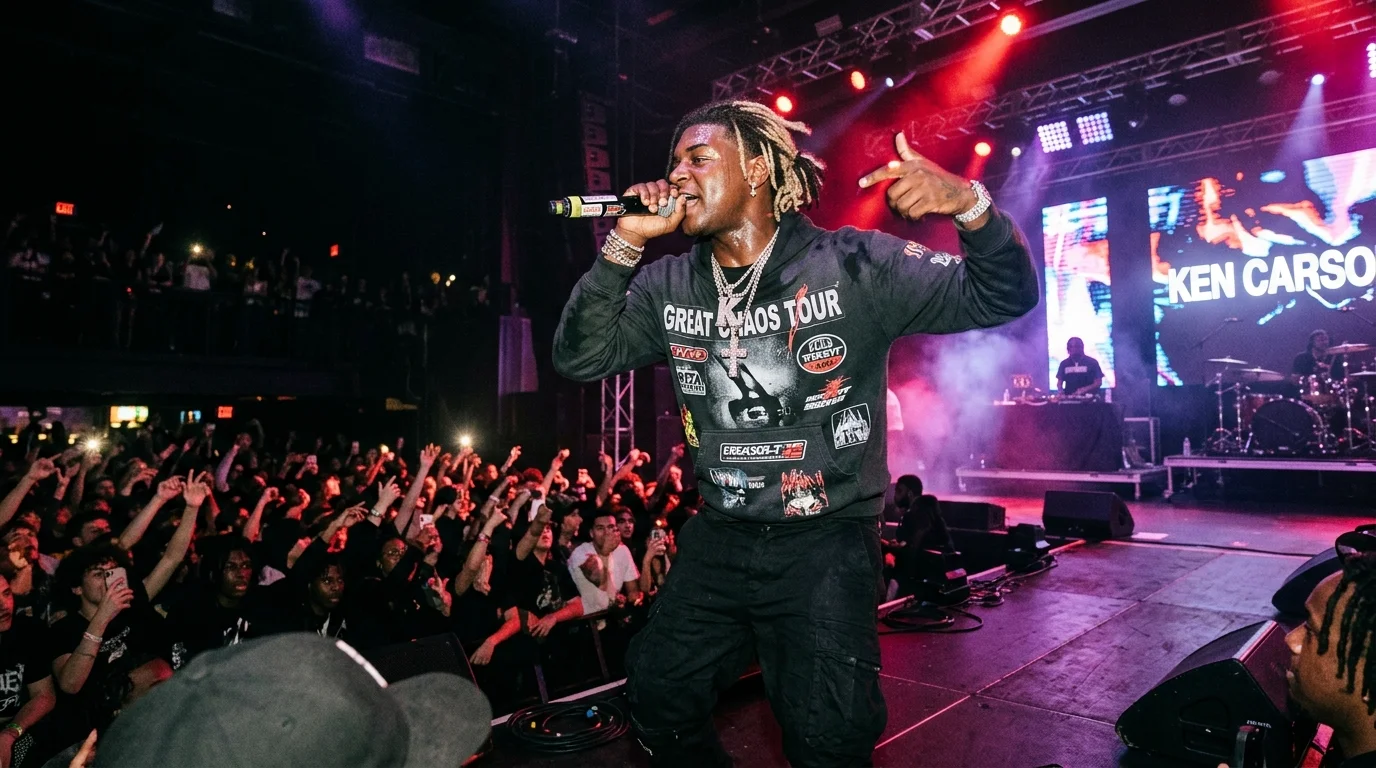
Ken Carson is one of rap’s fastest-rising stars, and fans want to know exactly how much the Atlanta rapper has built for himself. As of 2026, Ken Carson’s net worth is estimated between $3 million and $5 million, a figure driven by streaming royalties, sold-out tours, merchandise, and fashion brand partnerships. Born on April 11, 2000, in Atlanta, Georgia, Carson (real name Kenyatta Lee Frazier Jr.) is 26 years old and has become a defining voice of the modern rage rap movement. His wealth grew sharply after his album More Chaos hit number one on the Billboard 200, cementing his status as one of the genre’s most commercially successful young artists. Signed to Playboi Carti’s Opium label, Carson has turned a SoundCloud following into a full-fledged music career built on chart-topping projects, packed arenas, and a loyal, ever-growing fanbase.
Ken Carson’s Quick Facts
| Category | Details |
| Real Name | Kenyatta Lee Frazier Jr. |
| Net Worth | $4 million to $5 million (estimated) |
| Profession | Rapper, singer, record producer |
| Born | April 11, 2000 (Atlanta, Georgia) |
| Age | 26 |
| Label | Opium (Interscope Records) |
| Primary Income | Music streaming, touring, merchandise |
Ken Carson is an American rapper and producer from Atlanta, Georgia, best known for his role in the Opium collective built around Playboi Carti. As of 2026, most financial trackers place his net worth between $4 million and $5 million, a figure built through streaming royalties, sold-out tours, and merchandise sales tied to his fast-growing fan base.
Early Life and Background
Ken Carson was born Kenyatta Lee Frazier Jr. on April 11, 2000, in Atlanta, Georgia. He grew up on the west side of Atlanta before his family moved to the south side while he was still young, and school life was not always smooth for him during those years.
He started writing his own material as a young teenager, and a connection with producer Lil88, the nephew of well-known Atlanta producer TM88, opened doors that most aspiring rappers never get. Through that friendship, he began attending 808 Mafia studio sessions, where he picked up recording techniques and crossed paths with established artists including Future and Young Thug.
Career and Income Breakdown
Ken Carson’s professional path started earlier than most fans realize. He joined 808 Mafia in 2015 as a rapper after meeting TM88, and by 2017 he was uploading tracks to SoundCloud under the name Ken Car$on, later dropping the dollar sign for a cleaner stage name.
His breakout single arrived while he was enrolled in military school. He released the debut single “32” in 2016 while attending military school, followed by a run of loose tracks that built underground buzz well before any label came calling.
That buzz caught the attention of Playboi Carti, who met Carson through a TM88 studio session. In 2019, Carson signed to Carti’s newly formed label Opium, an imprint distributed through Interscope Records, and he became the first artist signed to Opium, ahead of labelmates Destroy Lonely and Homicide Gang.
Once signed, Carson’s release schedule picked up quickly. His debut studio album, Project X, dropped in 2021, followed by X in 2022. His third full-length, A Great Chaos, arrived in 2023 and became a turning point commercially. It reached the upper half of the Billboard 200 and earned gold certification, while its deluxe edition produced the charting single “Overseas” in 2024.
The real financial leap came with More Chaos in 2025. The project became Carson’s first album to debut at number one on the Billboard 200, a milestone that pushed his touring demand, brand interest, and streaming numbers sharply higher. He followed that success with the 2026 release Xperiment, keeping his output steady rather than resting on one hit project.
Touring has become one of the largest pieces of Carson’s income. His live shows shifted from small clubs to sold-out arena-style venues across North America and Europe, and ticket revenue from these tours now rivals what he earns from streaming platforms. Merchandise tied to each tour run, including apparel drops released alongside concert dates, adds another significant revenue stream on top of ticket sales.

Carson has also built a name outside of music. He has appeared in fashion campaigns, including work with Rick Owens, reflecting how closely the Opium aesthetic is tied to streetwear and high fashion culture. On the production side, he has worked behind the boards for fellow Opium artists Destroy Lonely and Homixide Gang, adding production credits and associated royalties to his income beyond his own recordings.
Income Sources
Ken Carson’s income comes from several channels rather than one dominant source. Streaming royalties from platforms such as Spotify and Apple Music form a steady base, though like most artists on a major-label-distributed imprint, he does not keep the full amount; label and publishing splits reduce what actually reaches him personally.
Touring has grown into his most reliable earner as his shows have moved into larger venues. Merchandise sold during tour stops and online adds a high-margin stream that does not depend on streaming numbers or radio play. Touring has similarly become one of the biggest confirmed income drivers for GloRilla as her audience has moved from viral singles into sold-out live shows.

Brand and fashion partnerships, including his connection to Rick Owens, contribute a smaller but growing share of his earnings. Production work for labelmates rounds out his income, giving him a producer credit and royalty stream separate from his own releases. Brand income plays an even larger role for established rappers such as Cardi B, whose fortune extends well beyond record sales
Where Estimates Differ
Public figures for Ken Carson’s net worth vary more than most celebrity finance pages let on. Some estimates land as low as $1.5 million, while others push toward $8 million to $10 million, and the gap comes down to which income streams each source counts and how they treat his label splits.

Carson has not released any audited financial statement, so every figure in circulation is an informed estimate rather than a confirmed number. A useful way to read the range is that the lower estimates often count only music royalties, while higher ones fold in touring gross, brand deal value, and label equity without adjusting for splits and expenses. The middle of the range, around $4 million to $5 million, lines up with the most consistent estimates across financial and entertainment outlets and reflects his accumulated personal wealth after label cuts rather than gross revenue generated by his music and touring business.