| Quick Facts | Details |
| Full Name | Jordan Mayowa Banjo |
| Date of Birth | December 31, 1992 |
| Birthplace | Wickford, Essex, England |
| Profession | Street dancer, TV presenter, radio host |
| Known For | Diversity, KISS Breakfast, Britain’s Got Talent |
| Spouse | Naomi Courts (married August 2022) |
| Children | Three (Cassius, Mimi, Atreus Funso) |
| Net Worth | Estimated around $4 million (public estimate) |
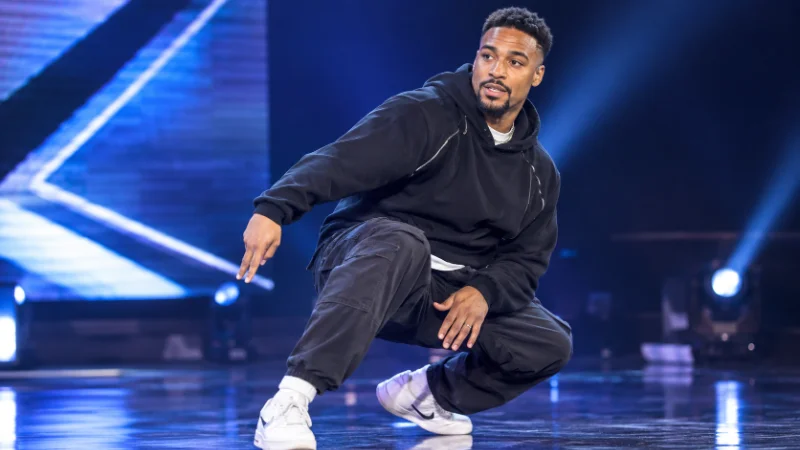
Jordan Banjo built his name as one of the founding members of Diversity, the street dance troupe that beat Susan Boyle to win Britain’s Got Talent in 2009. Since then, he has turned that early fame into a career that stretches across live tours, national radio, reality television, and most recently boxing. His net worth sits at an estimated $4 million, though the figure has never been confirmed by an official source, and it barely covers half of what makes him interesting to longtime fans.
Early Life and Family Roots in Essex
Banjo was born on December 31, 1992, in Wickford, Essex. His father, Funso Banjo, is a former professional heavyweight boxer of Nigerian descent, and his mother, Danielle Banjo, trained as a ballet dancer. That mix of discipline and rhythm shaped the household. His older brother Ashley Banjo also grew up dancing and would later become the driving force behind Diversity, while a younger sister, Talisa, rounds out the family.
Formal details about Banjo’s schooling are not widely documented in verified public records. What is clear from multiple interviews is that dance took over early. Before Diversity existed, he trained with a group called Swift Moves Juniors alongside future troupe members Sam Craske and Warren Russell, picking up the street and hip-hop influences that would define his style for the next two decades.
Growing up in a house with a boxer for a father and a ballerina for a mother gave Banjo two very different physical vocabularies to draw from, and both show up in how he moves now, whether that’s on a dance stage or, more recently, in a boxing ring. He has described his childhood in Essex as ordinary compared to the profile he built later, without the industry connections that often smooth the path for young performers.
Joining Diversity and the Britain’s Got Talent Breakthrough
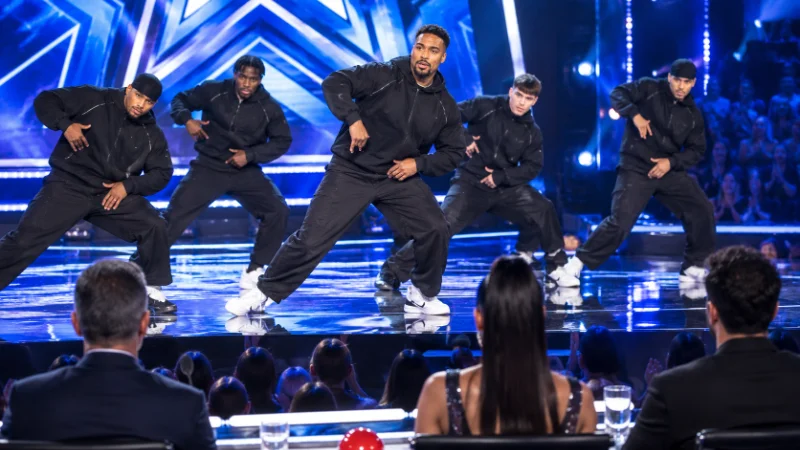
Ashley Banjo formed Diversity in 2007, and Jordan joined as one of the founding dancers, still a teenager at the time. The group built its identity around blending hip-hop, breakdancing, and contemporary movement into routines with a social message, a formula that set them apart from typical dance-troupe acts.
That approach paid off in 2009, when Diversity entered the third series of Britain’s Got Talent and won the competition outright, edging out singer Susan Boyle in a final watched by more than 17 million viewers. The victory turned street dance into mainstream entertainment overnight and gave Banjo, still barely out of his teens, a national profile. The group went on to headline arena tours across the UK and appeared in the 2010 film StreetDance 3D, cashing in on the wave of interest their win created.
Career Evolution: From Dance Floor to Television and Radio
Winning a talent show is one thing. Staying relevant for close to two decades is another, and Banjo did it by refusing to stay in one lane. He worked on the fourth series of Got to Dance in 2013 alongside fellow Diversity member Perri Kiely, then moved into reality television with a run on the sixteenth series of I’m a Celebrity… Get Me Out of Here! in 2016, finishing in ninth place after entering the jungle on day one.
Presenting work followed steadily. In 2018, he became the backstage digital correspondent for Dancing on Ice, and the following year he began co-hosting The Greatest Dancer on the BBC with Alesha Dixon. In 2021, he took part in The Masked Dancer as the character Viper, becoming the first contestant on the show ever unmasked. He added food and lifestyle television to his resume in May 2022, co-hosting Eat Well for Less with Chris Bavin.
Radio became a daily fixture in 2019, when Banjo and Perri Kiely began hosting the KISS Breakfast show together. The pairing ran for roughly five and a half years, ending with their final broadcast on January 30, 2026. Along the way, he returned to the jungle for I’m a Celebrity… South Africa in 2023, an All-Stars edition where he finished as runner-up to Myleene Klass after losing the final survival trial.
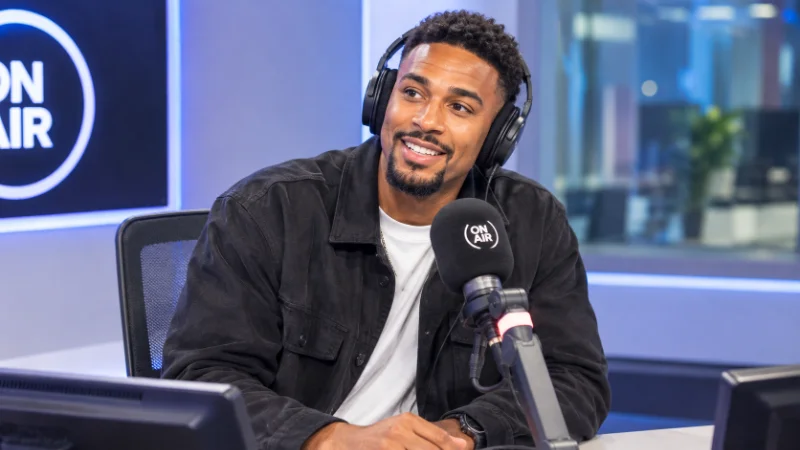
That run of credits shows a pattern rather than a series of one-off bookings. Banjo consistently picked roles adjacent to dance and entertainment rather than chasing unrelated fame, staying close to formats where his stage background gave him something genuine to add, whether that meant judging technique on a dance competition or explaining a challenge from inside a reality show camp. Kiely, his KISS co-host and longtime Diversity bandmate, has remained his most consistent professional partner outside the troupe itself, with the two working together across radio, Got to Dance, and multiple television bookings over more than a decade.
Jordan Banjo Net Worth
Jordan Banjo’s exact net worth has not been officially disclosed or verified by any financial authority, so any figure attached to his name is a public estimate rather than a confirmed number. Several entertainment finance outlets place his wealth at around $4 million, built up over more than fifteen years of Diversity arena tours, television presenting contracts with broadcasters including the BBC and ITV, and his long-running slot on KISS FM.
His income streams break down across a few main areas. Diversity’s touring and live show work has been the steadiest earner since 2009, while his presenting credits on shows like The Greatest Dancer, Eat Well for Less, and I’m a Celebrity add fees on a project basis. His five and a half years on KISS Breakfast provided a consistent salary through 2026, and his social media following, sitting at over 600,000 combined users according to third-party audience trackers, adds sponsorship income on top of that, though platforms don’t publish exact figures for individual creators.
Readers should treat the $4 million figure as an estimate rather than a fact. Celebrity wealth trackers typically calculate these numbers using visible income sources and public appearance fees, and they rarely account for taxes, management costs, or private investments that never make the press.
Compared with brother Ashley Banjo, who has built additional income as Diversity’s choreographer and through his own separate presenting deals, Jordan’s earnings lean more heavily on shared troupe work and his individual broadcasting contracts. Neither brother has confirmed a specific figure publicly, which is typical for UK entertainers whose income comes from a mix of touring, TV fees, and endorsement deals rather than a single measurable salary.
Wife Naomi Courts and Family Life
Jordan Banjo met Naomi Courts in 2013 at Sugar Hut, a nightclub in Brentwood, Essex, that gained its own fame through the reality show The Only Way Is Essex. The pair didn’t start dating until two years later, in 2015. Banjo proposed in January 2020 while the couple was on holiday in the Maldives, building a fire sign on the beach that read “Will U Marry Me?” He posted the moment on Instagram with the caption “Well, she didn’t say no.”
The couple married on August 14, 2022. They now have three children together: son Cassius, daughter Mimi, and their youngest, Atreus Funso, born in April 2023. Banjo has spoken openly in interviews about balancing a touring and broadcasting career with being a hands-on father, and about the pressure that public life put on his body image, including weight he gained during lockdown and the self-doubt that came with it. That openness has made him a recognizable voice on mental health in UK entertainment media, separate from his dancing credentials.
Early mornings on KISS Breakfast meant Banjo was often up before dawn while also managing three young children at home, a routine he has referenced in interviews as one of the harder parts of the job compared with touring, where the schedule is at least predictable. He has also talked about the decision to have a vasectomy after their third child, framing it as a straightforward family planning choice rather than something that needed to be treated as a big announcement, which is consistent with how directly he tends to discuss personal topics on air.
Boxing and Recent Ventures
In the last few years, Banjo has moved into boxing, both as a presenter and as an active competitor for DAZN, a shift that traces directly back to his father’s own career in the heavyweight ring. He has spoken about the crossover between the two disciplines, noting that footwork and rhythm carry over from dance to the boxing gym, and he has used pad work and sparring to stay conditioned while keeping training varied enough to avoid burnout.
He also took part in a Misfits Boxing event against former Love Island contestant Wil Anderson, a bout that drew attention partly because of his family’s boxing pedigree and partly because of his profile from Diversity and KISS Breakfast. Between the ring work, his continued involvement with Diversity, and his reality television appearances, Banjo has kept a media presence well outside the dance world that made him famous.
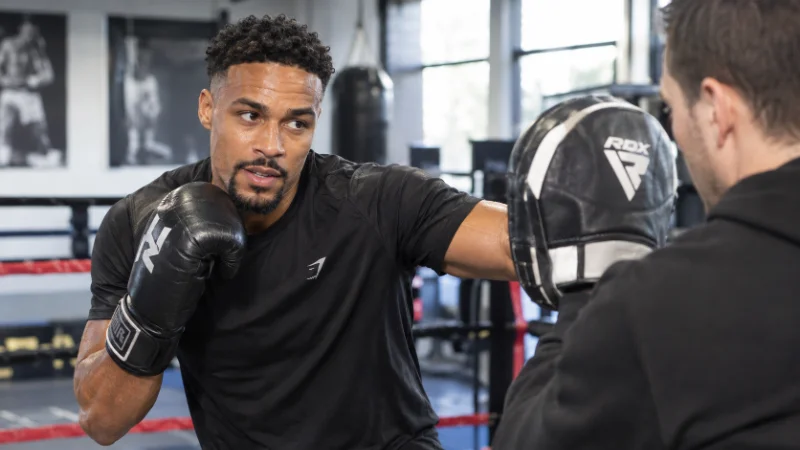
The boxing pivot arrived at a point when the KISS Breakfast run was winding down, and it gave Banjo a new competitive outlet that draws on the same discipline his early dance training required, just with a different set of physical demands. He has framed the move less as a reinvention and more as a return to something that was always part of his family history, given his father’s own boxing career before Jordan was born.
Legacy and Industry Impact
What separates Banjo from many of his Britain’s Got Talent peers is longevity through reinvention. Plenty of talent show winners fade once the initial wave of attention passes. Banjo instead used the platform that Diversity’s win created to build parallel careers in radio, reality television, and now boxing, without fully stepping away from the dance troupe that started it all.
His willingness to talk about body image and mental health, particularly the pressure of maintaining a public image while dealing with real insecurities, has added a layer of relatability that outlasts any single show or tour. For a performer whose career began with a nationally televised dance win as a teenager, that kind of staying power says more about his career than any single net worth figure could.
Diversity’s own legacy is tied up in this too. The troupe’s Britain’s Got Talent win is often credited with pushing street dance into mainstream British entertainment at a moment when the genre had little presence on primetime television, and Banjo has remained one of its most visible members even as the group’s individual members branched into separate careers. Fans searching his name today are as likely to be asking about his KISS Breakfast years or his family life as they are about the dance troupe that started it all, which is itself a sign of how far his profile has grown beyond the original act.