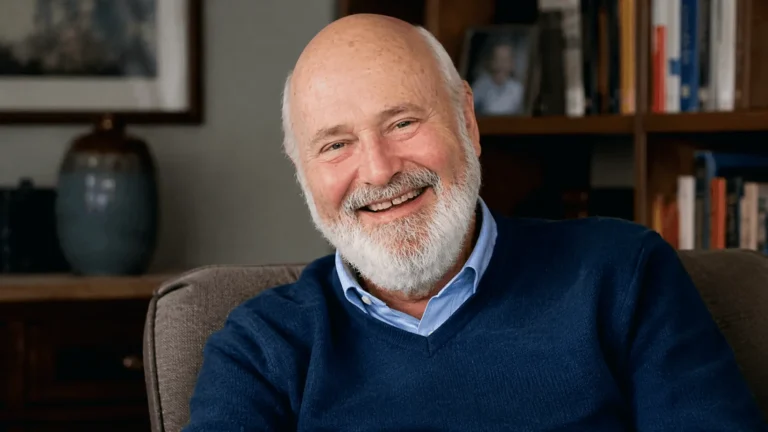
Don Ameche had a net worth of $5 million at the time of his death in 1993, an amount worth close to $10 million in today’s dollars. He earned that fortune across a 60-year career that ran from vaudeville stages to radio drama, then to two separate runs as a Hollywood leading man, capped by an Academy Award in his late seventies.
Quick Facts
| Category | Details |
| Real Name | Dominic Felix Amici |
| Born | May 31, 1908, Kenosha, Wisconsin |
| Died | December 6, 1993, Scottsdale, Arizona (age 85) |
| Net Worth | $5 million |
| Profession | Actor, voice artist |
| Nationality | American |
| Spouse | Honore Prendergast (married 1932 until she died in 1986) |
| Children | Six |
| Known For | The Story of Alexander Graham Bell, Trading Places, Cocoon |
| Awards | Academy Award for Best Supporting Actor (Cocoon, 1985) |
Early Life and Family Background
Don Ameche was born Dominic Felix Amici in Kenosha, Wisconsin, the son of an Italian immigrant father and a mother of Irish and German descent. He was one of eight children raised in a large, close-knit Midwestern household. His father worked as a bartender before opening his own business in Kenosha.
Ameche attended Marquette University, Loras College, and the University of Wisconsin with plans to study law. Those plans changed when he stepped into a college stage production and discovered he had a genuine talent for acting.
From Vaudeville to Radio Stardom
Ameche’s break came almost by accident. When the leading man in a local stock company was injured in a car accident, the young performer stepped in to replace him, and that single substitution set his career in motion.
He moved into vaudeville and repertory theater before landing steady work on Chicago radio in the early 1930s, appearing in programs such as Grand Hotel and The First Nighter Program. His rich baritone voice made him one of the most recognizable performers on the air, and that popularity is what eventually drew Hollywood’s attention.
Breaking Into Hollywood and Peak Earning Years
Ameche signed with 20th Century Fox in 1935 and quickly became one of the studio’s most reliable leading men, appearing in more than 40 films over the following 14 years. He worked opposite major stars of the era, including Claudette Colbert, Betty Grable, and Alice Faye.
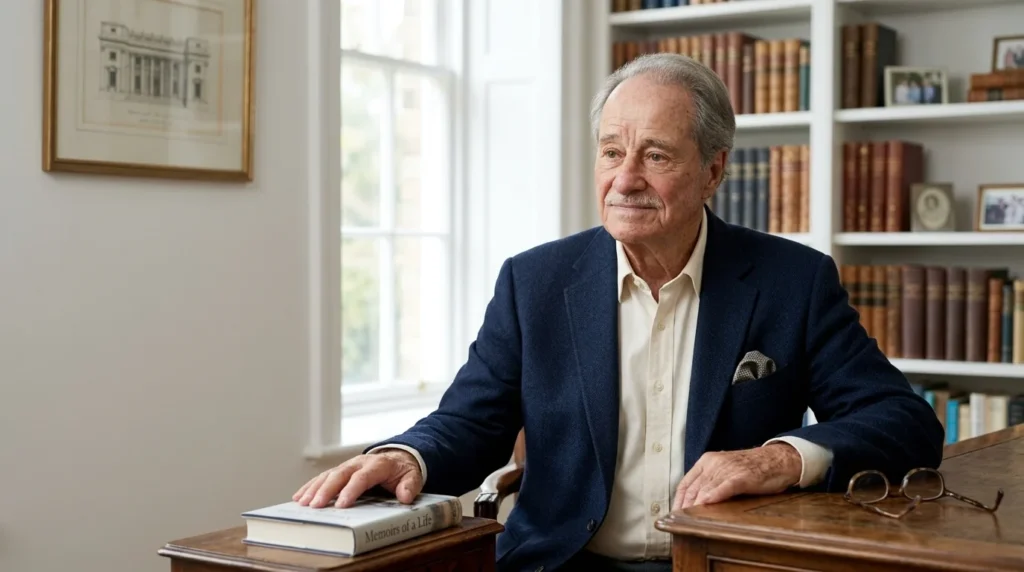
His financial peak came in 1943, when SEC filings showed Fox paying him $247,667 for the year, the equivalent of roughly $4.5 million today. Only studio president Spyros Skouras earned more at the company that year, which made Ameche the highest-paid actor on the Fox payroll.
Famous Films and Roles
Ameche’s most enduring early role came in The Story of Alexander Graham Bell (1939), where his performance was so widely seen that people began using his last name as slang for a telephone. Other standout films from this period include Midnight, Alexander’s Ragtime Band, Down Argentine Way, and Heaven Can Wait.
He was reportedly considered for the role of Vito Corleone in The Godfather decades later, though the part ultimately went to Marlon Brando. That near miss became one of the more talked-about footnotes of his career.
1. A Career Interrupted
By the late 1940s, Ameche’s Fox contract was winding down, and he chose not to renew it on the studio’s terms. He shifted his attention to Broadway musicals and early television, hosting NBC’s International Showtime from 1961 to 1965, while his film work slowed to a near stop for more than a decade.
The Comeback: Trading Places and Cocoon
Ameche’s return to the big screen began in 1983 with Trading Places, where he played one of two wealthy, scheming brothers alongside Ralph Bellamy, Dan Aykroyd, and Eddie Murphy. The role reintroduced him to a new generation of moviegoers and proved his comic timing had not faded.

Two years later, Ameche starred in Cocoon as a retirement-home resident whose life is transformed by an alien energy source. The performance won him the Academy Award for Best Supporting Actor in 1986, delivered at age 77, making his win one of the more celebrated late-career comebacks in Hollywood history.
1. Life After the Oscar
The win opened the door to steady work for the rest of his life. Ameche went on to appear in Cocoon: The Return, Harry and the Hendersons, Coming to America, Oscar, and Homeward Bound: The Incredible Journey. He also won the Volpi Cup for Best Actor at the Venice Film Festival for his performance in the 1988 film Things Change.
Don Ameche Net Worth Breakdown
Ameche’s $5 million net worth was built from several income streams rather than a single source. Decades of studio salary during his 1930s and 1940s peak formed the foundation, supplemented by Broadway pay, television hosting income, and residuals from an extensive film catalog.
His late-career revival added a second major income stream. Roles in Trading Places, Cocoon, and the films that followed came with the higher paychecks typical of a recognizable character actor in demand, and that stretch of work in his seventies and eighties meaningfully padded his lifetime earnings.
Personal Life: Marriage and Children
Ameche married his childhood sweetheart, Honore Prendergast, in 1932. The couple stayed married for 54 years, until she died in 1986, and raised six children together, four sons and two daughters. He never remarried after her passing.
Family remained central to his life even during his busiest working years, and those close to him often noted that his Midwestern upbringing shaped a grounded, unpretentious approach to fame that carried through both phases of his career.
Death and Legacy
In his mid-eighties, Ameche was diagnosed with prostate cancer. He died on December 6, 1993, at his son’s home in Scottsdale, Arizona, at the age of 85. His final film, Corrina, Corrina, was completed just days before his death and released the following year.

Ameche’s legacy rests on the rare shape of his career: a genuine golden-age leading man who, decades later, became just as well known to a new audience through an Oscar-winning comeback. Few actors from his generation managed both.
The Bickersons and His Radio Legacy
Ameche’s most beloved radio character had nothing to do with his movie work. Alongside singer Frances Langford, he played the perpetually squabbling John Bickerson in a recurring sketch that began on The Chase and Sanborn Hour and grew into its own half-hour series, The Bickersons, starting in 1946. The routine was sharp, fast, and often genuinely biting, and it made Ameche one of radio comedy’s most recognizable voices at a time when his film career had already started to slow down.
The pairing was popular enough to outlast radio’s golden age. Ameche and Langford recorded two Bickersons comedy albums for Columbia Records in the early 1960s, and both charted on the Billboard Top LPs list, a rare feat for a bit that started as a few minutes of banter between musical numbers.
Hollywood Walk of Fame and Other Honors
Long before his Oscar, Ameche’s decades of broadcast work earned him lasting recognition. He received two stars on the Hollywood Walk of Fame in 1960, one for radio and one for television, a reflection of how central those two mediums were to his career even during his years away from film.
Recognition kept arriving late in his life. In 1992, a year before his death, Ameche was inducted into the Radio Hall of Fame, a fitting bookend for a performer whose career had actually begun on the airwaves decades before Hollywood ever offered him a contract.
Broadway and the Live Stage
Ameche’s stage career took shape during the years his film work dried up. After vocal training, he made his Broadway debut in the musical Silk Stockings in 1955, a role he later named among the highlights of his career. He followed it with Holiday for Lovers and Goldilocks later that decade, proving his range extended well beyond the screen.
He returned to Broadway again in 1989, appearing in a revival of Our Town, and continued treating live theater as a home base even after his film comeback made him famous to a new generation. That willingness to keep working on stage, radio, and television during the lean years is often cited as what kept him ready for his eventual comeback.